PRODUCT

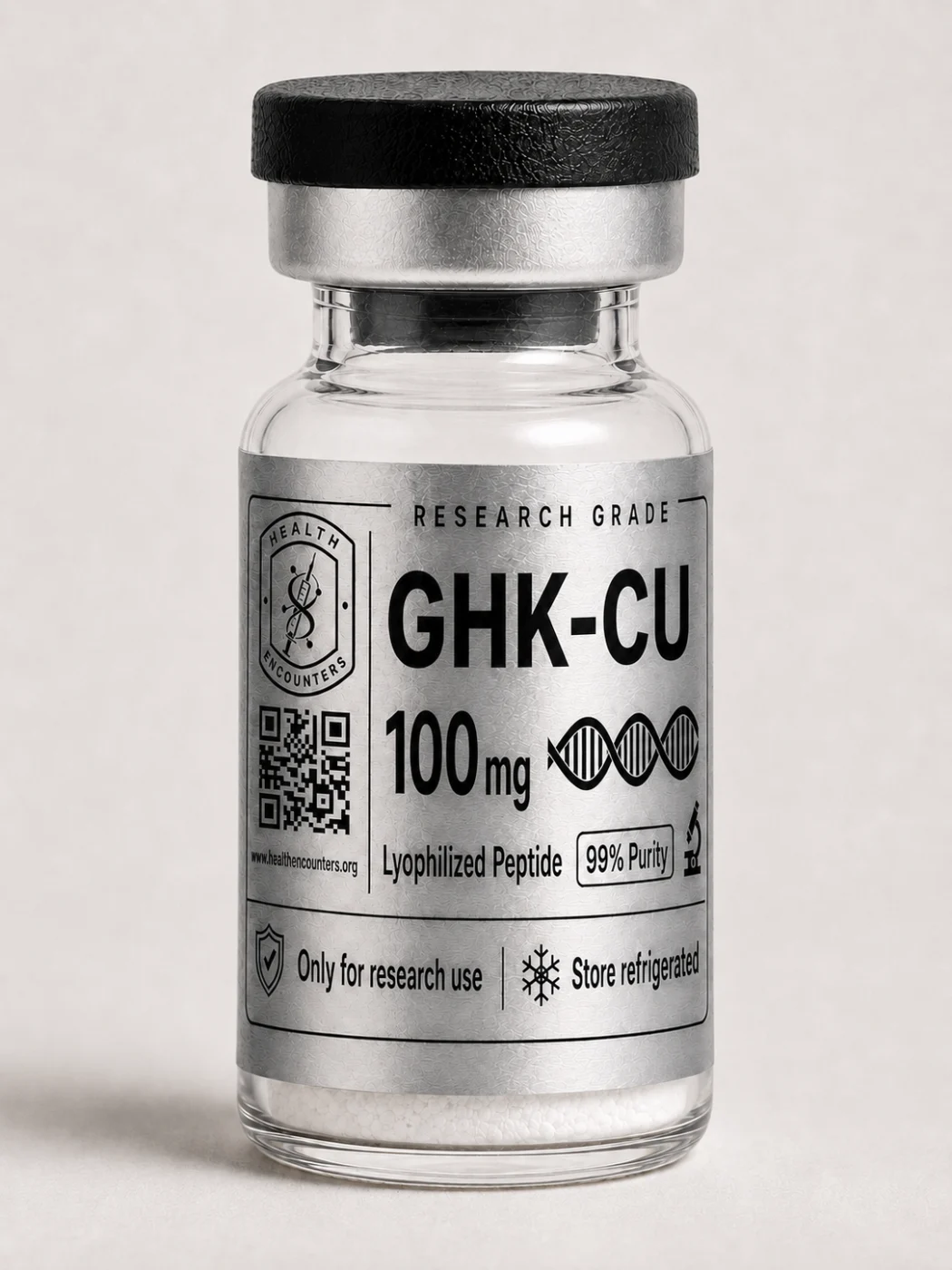
GHK-CU 100mg

GHK-Cu 100 mg – copper-binding GHK tripeptide complex for biochemical and scientific research applications.

49,90 €
FOR RESEARCH USE ONLY, NOT FOR HUMAN CONSUMPTION
No reviews yet
Available
EU shipping Bitcoin payment Live stock status
GHK-Cu · COPPER TRIPEPTIDE

What is GHK-Cu?

RESEARCH FOCUS Skin & tissue repair

What is GHK-Cu studied for?

GHK-Cu is the copper complex of the naturally occurring tripeptide glycyl-L-histidyl-L-lysine. Research focuses on tissue repair, wound healing, extracellular matrix biology and skin regeneration.

BIOLOGICAL APPROACH Copper-binding tripeptide

Why is GHK-Cu scientifically interesting?

Cell and animal models describe effects involving collagen, glycosaminoglycans, inflammatory signalling, cell migration and tissue repair.

EVIDENCE STATUS Limited human data

How well studied is GHK-Cu in humans?

The mechanistic and preclinical literature is substantially larger than the controlled human evidence. A recent review highlights the surprising lack of robust clinical trials.

AT A GLANCE

Key facts

Skin & tissue research area regeneration and wound repair
Preclinical evidence focus cell and animal models dominate
Not established clinical half-life no robust human PK
Unapproved drug status no established systemic indication
EVIDENCE

What do research and human data show?

GHK-Cu has a broad mechanistic research base but limited clinical human evidence.

Current evidence snapshot

Human study 13 people topical GHK-Cu after CO₂ laser treatment
2025 review Limited clinical evidence remains sparse
2026 research Preclinical GHK-Cu hydrogel tissue-repair model

The small CO₂-laser study found no significant objective improvement in wrinkles or skin quality, although patient satisfaction was higher.

RESEARCH METHODS

How has GHK-Cu been studied?

Models In vitro · topical · animal

Most evidence does not come from systemic human trials.

Pharmacokinetics Not established

A reliable systemic human half-life has not been established.

Human evidence Limited

Small topical studies exist; large controlled programmes do not.

Systemic safety Not established

No evidence base comparable with approved medicines.
GHK-Cu 100 mg Scientific overview
RESEARCH MATERIAL — NO ESTABLISHED SYSTEMIC HUMAN USE

GHK-Cu — scientific overview

GHK-Cu is the copper complex of glycyl-L-histidyl-L-lysine.

Mechanistic and preclinical studies describe regenerative and extracellular-matrix effects.

Human clinical evidence remains limited.

1. Scientific profile

Parameter Classification
Molecule Glycyl-L-histidyl-L-lysine-Cu²⁺
Class Copper-binding tripeptide
Evidence Predominantly mechanistic / preclinical
Drug status No established systemic approval

2. Biological research context

GHK-Cu is not defined by a single pharmacological receptor.

Area Observation Context
Cu²⁺ Copper binding GHK forms a stable copper complex.
ECM Matrix regulation Cell and preclinical data describe collagen and glycosaminoglycan effects.
Repair Tissue repair Inflammation, migration and wound healing are studied in several models.

3. Human evidence

Human evidence remains limited relative to the preclinical literature.

What is actually supported?

CO₂-laser trial

13 participants; no significant objective differences in erythema, wrinkles or skin quality.

Subjective outcome

Patient satisfaction with skin quality was higher in the GHK-Cu group.

2025 review

Highlighted a surprising absence of robust clinical studies.

2026 research

New hydrogel research remains preclinical rather than human efficacy evidence.

4. Current research status

Mechanistic Broad cell and preclinical literature
Human Limited, predominantly topical
Systemic PK Not adequately established

5. Research-material distinction

Preclinical mechanisms and cosmetic literature do not establish clinical efficacy, systemic safety or properties of a specific research batch.

6. Scientific sources

  1. GHK anti-wrinkle review (2025) Current review highlighting limited clinical evidence
  2. GHK-Cu after CO₂ laser resurfacing Small randomized human study, 13 participants
  3. GHK in skin regeneration review Mechanistic and preclinical review
  4. GHK-Cu hydrogel study (2026) Current preclinical tissue-regeneration research
Scientific status reviewed: August 2026
REVIEWS

Customer reviews

There are no reviews for this product yet.